
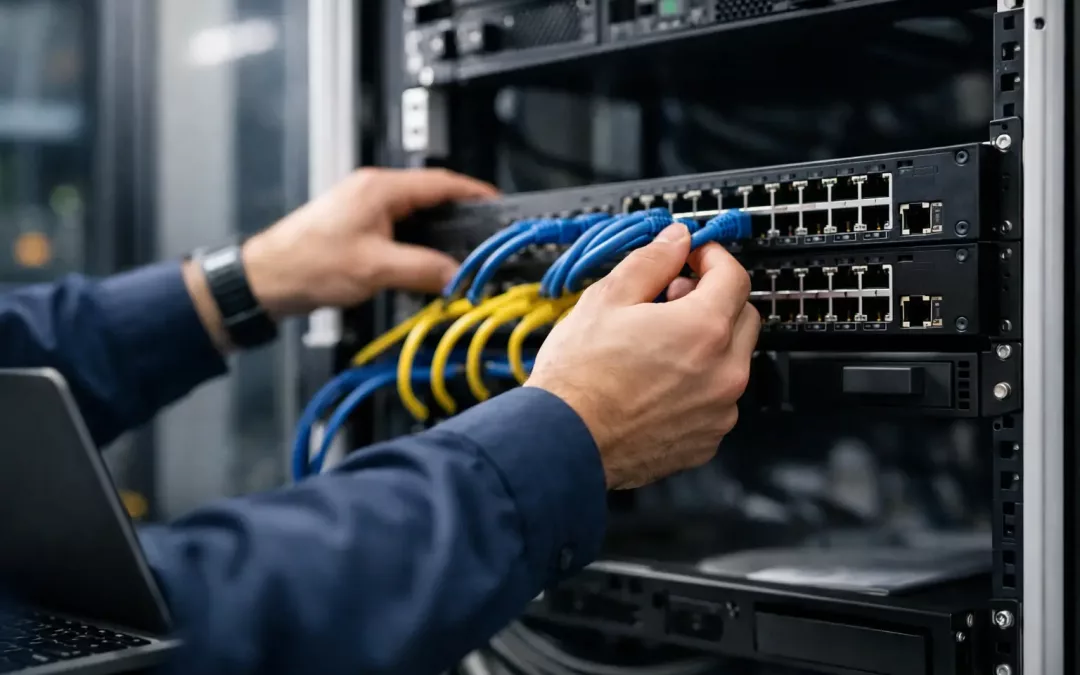
A switch problem usually does not look like a switch problem at first. It looks like dropped calls in one office, slow file transfers in another, a printer that randomly disappears, or a Wi-Fi system that never quite performs the way it should. That is why a professional network switch installation service matters. The switch sits at the center of your wired network, and if it is undersized, poorly configured, or installed without a clear plan, the whole site feels the impact.
For small and mid-sized businesses, the real goal is not just getting a switch mounted and powered on. It is building a network that supports daily work, protects traffic, and leaves room for growth without forcing another major upgrade six months later. For homes with advanced connectivity needs, the same principle applies. The physical install, cable layout, hardware selection, and testing all need to work together.
What a network switch installation service should actually cover
A lot of people assume switch installation is a quick hardware task. In reality, a good network switch installation service starts before the hardware arrives. The first question is what the network needs to support right now. That might include workstations, VoIP phones, wireless access points, security cameras, printers, conference room systems, or specialty devices tied to operations.
From there, the installer should look at port count, uplink requirements, power over Ethernet needs, rack space, cable pathways, and how traffic should be segmented. A 24-port unmanaged switch may be enough for a very small site with simple needs, but many business environments are better served by managed switching that allows for VLANs, monitoring, and stronger control over network performance.
The installation itself should include proper mounting, organized patching, labeling, and clean cable management. That sounds basic, but it becomes a major issue when troubleshooting later. If no one can identify what is patched where, every small network change becomes slower and riskier than it should be.
Why the right switch install affects speed, stability, and security
A switch is not just a traffic pass-through device. It controls how devices communicate across the local network. When the setup is done well, users notice fewer interruptions, more consistent application performance, and better reliability for voice, Wi-Fi, and shared resources.
Security is another reason installation matters. Managed switches can support network segmentation, which helps isolate devices and reduce unnecessary exposure. That is especially useful for separating office computers from guest Wi-Fi, camera systems, or VoIP traffic. If everything lives on one flat network, a small problem can spread farther than it should.
There is also a performance trade-off that many property managers and office teams miss. Buying the least expensive switch may save money upfront, but it can create bottlenecks if the network is growing, if multiple access points are in use, or if large files move between users and servers every day. On the other hand, overbuilding can waste budget if the site will never use advanced features. The right answer depends on the layout, device count, application load, and business plans.
Signs your current switch setup needs attention
Sometimes the need for service is obvious, like during an office buildout, expansion, or relocation. In other cases, the warning signs are more subtle. Random slowdown at peak times, recurring disconnects, patch panels that have turned into a mess, limited ports, and older hardware that no longer matches current bandwidth needs are all common indicators.
Another issue is Power over Ethernet capacity. Access points, phones, and cameras often rely on switch-based power. If the switch does not have enough PoE budget, devices may work inconsistently or fail to power on at all. This often shows up after a business adds hardware in phases without reevaluating the switching infrastructure.
Aging hardware can also become a problem even if it still appears functional. Networks change. Internet speeds increase, Wi-Fi standards evolve, and offices add more connected devices than they did a few years ago. A switch that was acceptable before may now be the quiet source of daily frustration.
How a professional installation process works
Network switch installation service for business sites
For most business locations, the process starts with an on-site review. That means identifying where the switch should live, what cabling already exists, whether the rack or wall-mount setup is adequate, and how many devices need to connect now versus later. A contractor should also review whether the current structured cabling supports the speeds you expect.
Next comes equipment selection and design. This is where experience matters. The installer should match the switch type to the environment instead of forcing a one-size-fits-all solution. A front office with a handful of users has different needs than a multi-suite office, warehouse, retail site, or medical practice.
After the design is approved, the physical installation should be organized and low disruption. That includes mounting the switch, terminating or patching connections as needed, labeling runs, connecting uplinks, and documenting the layout. If the site depends on active operations during business hours, timing and sequencing matter. The work should be planned to reduce downtime, not create it.
Configuration and testing are where the job proves its value. The switch should be set up correctly for the network plan, whether that includes VLAN assignments, trunk ports, management access, PoE allocation, or integration with routers, firewalls, and access points. Then every critical connection should be tested. It is not enough to see blinking lights and call it done.
When installation should include more than the switch itself
In many cases, switch work exposes other gaps in the network. If cabling is outdated, mislabeled, damaged, or poorly terminated, a new switch will not fix the underlying problem. The same is true if Wi-Fi coverage is weak, the firewall is outdated, or the network closet lacks basic organization.
That is why many businesses prefer one provider who can handle the broader infrastructure picture. A switch installation may tie directly into structured cabling upgrades, fiber runs between spaces, wireless access point placement, or firewall and VPN changes. Treating the switch as an isolated piece of hardware can lead to partial fixes when a full network improvement is what the site actually needs.
This matters during office moves as well. Relocations often involve internet carrier coordination, rack planning, equipment reinstallation, and testing under tight timelines. If the switch install is handled without looking at the full turnover plan, move day becomes more stressful than it needs to be.
What to look for in a network switch installation service provider
The best provider is not just someone who can rack a device. You want a team that understands structured cabling, network hardware, layout planning, and how business operations depend on reliable connectivity. That combination helps prevent handoff problems where one vendor blames another.
Clear communication is another good sign. A strong installer should explain what hardware is being recommended, why it fits the site, what disruptions may occur, and what testing will be completed before signoff. If those answers are vague, the project may be too.
Local responsiveness can matter more than people expect. If your office is expanding, dealing with outages, or preparing for a move, waiting days for a simple site visit is not ideal. In the Charleston area, businesses often benefit from working with a contractor that can assess the space in person, move quickly, and handle both the cabling side and the equipment side without creating extra coordination work.
All Wiring Needs fits that model by combining network hardware installation with structured cabling, Wi-Fi optimization, fiber work, and broader connectivity support. For businesses and homes that want one accountable team instead of several partial vendors, that saves time and avoids confusion.
The cost question most customers really mean to ask
Most people ask what switch installation costs, but what they usually mean is what level of work they actually need. Pricing depends on the number of switches, the type of switch, whether new cabling is required, the complexity of configuration, and how much testing or remediation is involved.
A clean replacement in an organized environment will cost less than a full refresh in a cluttered network closet with undocumented runs and aging infrastructure. Neither is unusual. The difference is whether the scope is identified early so there are no surprises once the work starts.
If you are planning a switch upgrade or troubleshooting recurring connectivity issues, the smart move is to start with a real assessment rather than guessing at hardware. The right installation should leave you with a network that is easier to manage, easier to scale, and less likely to interrupt the work that keeps your business moving.