
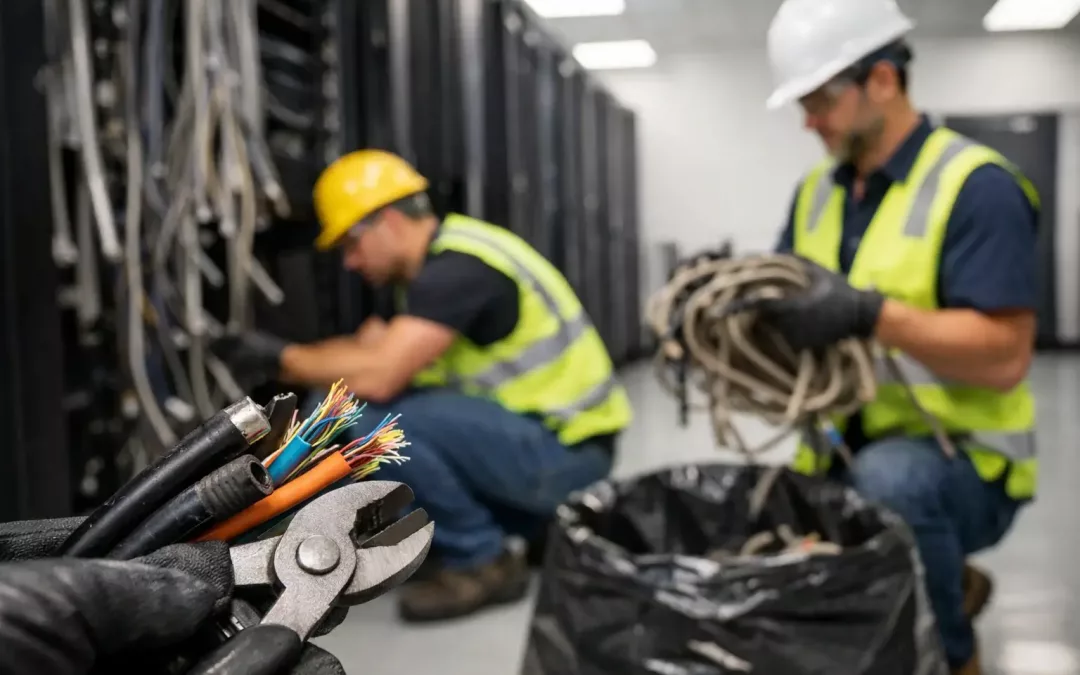
Old cable rarely causes one obvious problem. It causes ten small ones that stack up – crowded ceilings, messy telecom rooms, poor airflow, slower troubleshooting, and more confusion during every move, add, or change. That is why cable removal and abatement matters. When unused, abandoned, or poorly documented cabling stays in place, it turns a clean network environment into a harder-to-manage one.
For business owners, office managers, property teams, and IT decision-makers, this is not just a cleanup task. It is part of protecting uptime, making future upgrades easier, and keeping infrastructure organized enough to support growth. If your building has gone through multiple tenant changes, ISP swaps, remodels, or network upgrades, there is a good chance old cabling is still sitting above ceilings or packed into pathways long after it stopped serving a purpose.
What cable removal and abatement actually includes
Cable removal and abatement is the process of identifying inactive or abandoned low-voltage cabling, tracing what is still in use, removing what is no longer needed, and leaving the space cleaner, safer, and easier to work in. In most commercial settings, that can include old data cabling, legacy phone lines, outdated coax runs, disconnected patching, and cabling left behind from prior tenants or previous technology setups.
The key point is that removal should never be handled like a blind rip-out. Active systems often share pathways, racks, and ceiling space with older cable. If a contractor starts pulling without tracing and verification, you can end up with outages, device failures, or damaged infrastructure that was supposed to stay online.
A proper abatement project starts with visibility. What is live, what is abandoned, what is mislabeled, and what is creating congestion? Once that is clear, removal can happen in a controlled way that supports business operations instead of disrupting them.
Why cable removal and abatement matters for business operations
The biggest benefit is not cosmetic, although cleaner spaces do help. The bigger value is operational control. When your cabling environment is overloaded with dead runs and undocumented pathways, every future project gets harder. Adding a new workstation takes longer. Troubleshooting a bad connection takes longer. Expanding wireless coverage or replacing switching hardware becomes more expensive because crews have to work around years of clutter.
There is also the issue of airflow and physical space. Packed network closets and congested pathways make it more difficult to manage equipment layout and cooling. In ceiling spaces, excessive abandoned cable can crowd supports and reduce the usable room available for new installs. That might not sound urgent until you need to roll out new cabling fast and discover there is no clean route left.
For commercial properties, there is another practical concern: tenant turnover. Buildings that have seen multiple occupants often accumulate layer after layer of old infrastructure. One company moves out, another moves in, and nobody wants to spend time sorting out what belongs to whom. Over time, that neglect creates confusion and added labor on every future job.
The signs your site likely needs cable removal and abatement
In many cases, the need is obvious as soon as someone opens the telecom room. Bundles of disconnected cable, unlabeled patch panels, legacy voice blocks no one uses anymore, and ceiling pathways packed with old runs are all strong indicators.
Other signs are less visual. If your team struggles to trace ports, if simple network changes take longer than they should, or if office renovations keep running into undocumented cabling, those are signs too. The same goes for businesses preparing for relocation, remodeling, ISP changes, or structured cabling upgrades. Those moments are often the best time to remove what no longer serves the site.
It also makes sense before a new tenant improvement project or before handing over a property. Cleaning out abandoned infrastructure gives the next phase of work a better starting point and reduces the chance of avoidable delays.
What a professional process should look like
The difference between a smart removal project and a risky one comes down to process. First, the existing environment needs to be assessed. That means identifying cable types, tracing pathways, reviewing labeling, and separating active infrastructure from inactive runs. In some buildings, this step is straightforward. In others, especially older offices or facilities with years of undocumented changes, it takes careful testing and field verification.
Next comes the plan for staged removal. A good contractor considers occupied work areas, business hours, equipment dependencies, and how to avoid service interruptions. Some projects can be completed all at once. Others are better handled in phases so users stay online while cleanup happens around active systems.
Removal itself should be methodical. Cables are detached, extracted from pathways where appropriate, and cleared from racks, closets, and overhead spaces without disturbing in-service infrastructure. After that, the remaining environment should be organized, labeled where needed, and prepared for whatever comes next – whether that is a new cabling install, office reconfiguration, or simply a cleaner and more manageable network footprint.
Documentation matters here. If a contractor removes hundreds of feet of dead cable but leaves no updated picture of what remains, the client only gets half the value. Good abatement work should leave the site easier to understand than it was before.
When removal is worth the investment – and when it can wait
Not every site needs a full cleanup immediately. If the abandoned cabling is minimal, not affecting operations, and not blocking future work, partial cleanup may be enough for now. Some businesses choose to address the worst areas first, such as the main telecom room, a congested IDF, or pathways tied to a renovation.
On the other hand, waiting can become more expensive when clutter keeps growing. If your business is planning a network refresh, office expansion, relocation, or security upgrade, doing removal at the same time usually makes sense. You already have work happening, access to spaces is already being coordinated, and the cleanup can support the quality of the new installation.
There is also a labor trade-off. The longer abandoned cabling sits in place, the more tangled it often becomes with newer infrastructure. That can make future removal slower and more complex than dealing with it during the current project window.
Common mistakes to avoid
The biggest mistake is assuming all old-looking cable is safe to remove. Appearances are not enough. Many active runs are poorly labeled or routed alongside older cabling. Without tracing and testing, you are guessing.
Another mistake is treating abatement as separate from the broader network plan. If a business is preparing for new Wi-Fi access points, switch upgrades, office reconfiguration, or a move, cable cleanup should be coordinated with those goals. Otherwise, teams end up paying for ceiling access twice or creating unnecessary rework.
A third issue is choosing speed over control. Quick removal sounds efficient, but the real goal is zero surprises. Businesses care less about a crew finishing one hour faster and more about avoiding downtime, preserving active connections, and ending up with a cleaner foundation for future work.
How this supports upgrades, moves, and cleaner network performance
Cable removal and abatement is often most valuable when paired with another project. During an office move, it helps separate what should move forward from what should stay behind. During a structured cabling upgrade, it opens pathways and reduces clutter before new Cat6 or fiber runs are installed. During a network room reorganization, it makes rack cleanup and labeling much more effective.
For MSPs and internal IT teams, this work can also reduce day-to-day friction. A cleaner physical layer means less time spent chasing mystery ports, sorting through dead patching, or second-guessing what is still connected. That translates into faster support, clearer records, and easier growth.
For property owners and managers, it improves readiness. Whether the next step is a renovation, tenant turnover, or infrastructure modernization, a cleaned-up cable environment removes one more hidden obstacle from the job.
Choosing the right contractor for the job
This is one of those services where experience with live network environments matters. The right contractor understands structured cabling, active network dependencies, site coordination, and how to work around business operations without creating disruption. They should be able to explain the process clearly, identify risks up front, and align cleanup with the larger connectivity goals of the site.
That matters even more in busy offices, multi-tenant spaces, medical environments, retail locations, and facilities where downtime has a direct cost. In those settings, cable removal is not just cleanup. It is infrastructure work that needs to be planned with the same care as a new installation.
If your ceilings, closets, or pathways are full of abandoned cabling, leaving it alone usually does not make the next project easier. It just pushes the problem forward. A well-executed cleanup gives you back space, visibility, and a better starting point for whatever your network needs next.
If you are already planning changes to your space or your connectivity, this is a good time to deal with the cable that should have been removed years ago.