
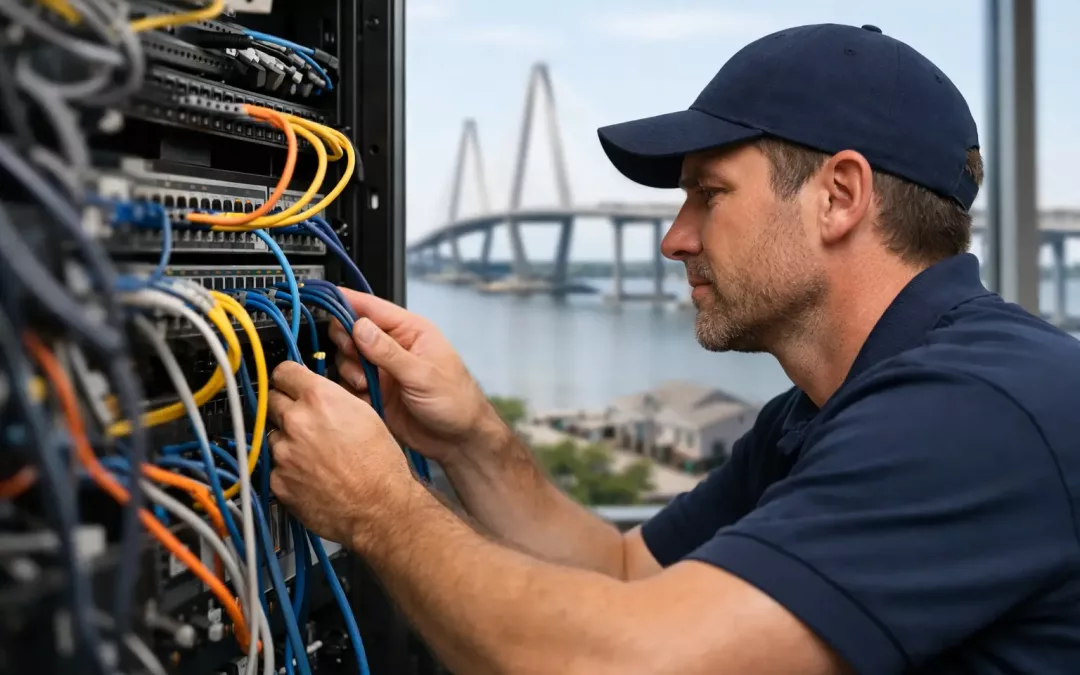
A slow connection is not always an internet-provider problem. In many Charleston offices and homes, the real issue sits behind the walls, above the ceiling, or inside an overcrowded network closet. If you are asking, “why hire a local network wiring contractor in Charleston?” the practical answer is simple: reliable connectivity depends on a physical network designed for the building, the people using it, and the work that must continue without interruption.
A local contractor can assess the site in person, identify the weak points, install the right cabling and hardware, and remain available when priorities change. That matters whether you are opening a new office, expanding a warehouse, improving Wi-Fi coverage, relocating teams, or trying to stop recurring network headaches.
Why hire a local network wiring contractor in Charleston?
Network wiring is not a one-size-fits-all service. A floor plan, wall construction, equipment location, number of users, wireless coverage goals, security requirements, and future growth all affect the right design. A contractor who works locally can see those details before work begins instead of making assumptions from a remote drawing or a short support call.
Charleston-area properties also vary widely. A historic office, a modern medical suite, a retail space, and a growing business park may each present different access paths, layout limitations, and installation priorities. Local experience helps turn those conditions into a realistic plan that protects both performance and the appearance of the space.
The goal is not just to pull cable from one point to another. It is to create organized infrastructure that supports dependable internet access, clear video calls, stable cloud applications, security devices, access points, and the next phase of your business.
A site visit prevents expensive assumptions
Remote IT support is valuable for many tasks, especially software, user accounts, and certain equipment settings. But physical infrastructure needs a hands-on review. A local network wiring contractor can trace existing cable routes, inspect the network rack or closet, evaluate available pathways, and determine where new drops, access points, cameras, or hardware should be placed.
That on-site perspective often reveals issues that are easy to miss otherwise: poorly labeled cabling, aging Category cable, damaged terminations, tangled patch cords, crowded conduits, access points placed behind obstructions, or network equipment located too far from the areas it serves. Addressing these items during planning is far less disruptive than discovering them after employees have moved in or new equipment is already installed.
It also makes estimates more accurate. Rather than quoting a generic package that may not match your building, the contractor can recommend Cat6, Cat6A, fiber, or another appropriate solution based on bandwidth needs, distance, budget, and anticipated growth.
Better Wi-Fi starts with the wired foundation
When Wi-Fi is weak, many organizations buy additional access points first. Sometimes that helps. Sometimes it creates more overlap, more management complexity, and no meaningful improvement because the underlying wired network was never evaluated.
Each access point needs a dependable connection back to the network. Its location matters as much as the model selected. A local contractor can review coverage areas, user density, building materials, conference rooms, outdoor work areas, and high-traffic zones to place access points where they can perform effectively.
This is especially useful for businesses that rely on cloud software, voice services, mobile devices, point-of-sale systems, guest networks, or video conferencing. A thoughtful wired and wireless design reduces dead zones and helps prevent the frustrating pattern of employees moving around the office to find a usable signal.
One provider can coordinate cabling, hardware, and connectivity
A network project often involves more than cable installation. You may need switches, routers, firewalls, VPN access, wall-mounted racks, patch panels, access points, carrier service, equipment removal, or an office relocation plan. Coordinating separate vendors for each piece can slow the project and leave gaps between scopes of work.
A contractor with both cabling and business connectivity experience can manage the work as one coordinated project. That means the physical layout can support the selected hardware, the hardware can be installed in a logical location, and the internet service plan can align with the site’s actual needs.
For office moves and expansions, this coordination is particularly valuable. The network should be ready before the team arrives, not pieced together after the first day of operations. Planning ahead gives the contractor time to map workstations, conference rooms, printers, phones, security devices, and shared equipment so the transition creates minimal downtime.
Local responsiveness matters when the schedule changes
Construction schedules shift. A tenant receives keys later than expected. A new employee group is added. A carrier installation date moves. A conference room needs another data connection after furniture is installed. These are common situations, not rare exceptions.
Working with a local contractor gives you a practical path to adjust. You can speak with someone who understands the project, can return to the site when needed, and can communicate clearly with property managers, builders, IT teams, and operations leaders.
Responsiveness also matters after installation. If a labeled port needs to be identified, a network closet needs to be cleaned up, or a new device requires a connection, having a nearby partner is more useful than searching for a new vendor every time a small need becomes urgent.
Testing and documentation protect the investment
A cable that looks properly installed is not necessarily performing as intended. Professional network wiring work should include testing, labeling, and organized termination so future service is faster and less disruptive.
Clear labeling gives your IT team, managed service provider, or future contractor a usable map of the network. Instead of tracing mystery cables during an outage, they can identify the appropriate port, room, and connection point quickly. Organized patch panels and cable management also make it easier to add users, replace equipment, and troubleshoot issues without creating more confusion in the rack.
Ask how the contractor verifies installed cabling and what documentation will be provided at project completion. The answer should be clear. Testing and records may feel like small details during an installation, but they become extremely valuable when your business needs to make changes months or years later.
Security starts at the network edge and the network closet
Network security is not limited to passwords and software settings. The physical network affects how safely traffic moves through your building and how easily equipment can be managed. Properly installed switches, firewalls, VPN configurations, and separated network segments can help protect business devices, guest access, cameras, and connected systems.
A local contractor can work with your existing IT provider or manage defined parts of the project directly. For example, a business may need new Cat6A runs for high-bandwidth workstations, a secure firewall installation, dedicated connections for cameras, or a guest Wi-Fi network separated from internal operations.
The right approach depends on the organization. A small office with a limited number of devices has different needs than a multi-suite business, a healthcare practice, or a growing company with remote staff. Good advice should match the risk, the budget, and the way your team actually works.
Local knowledge helps you plan for growth, not just today
The least expensive installation is not always the best value. Running only enough cable for current desks may seem efficient, but it can become costly when teams grow, layouts change, or new technology is added. On the other hand, overspecifying every part of a small project can waste budget that would be better spent on coverage, security, or carrier service.
A knowledgeable local contractor helps balance those trade-offs. They can recommend where it makes sense to add spare runs, choose higher-capacity cable, install fiber, reserve rack space, or create pathways for future expansion. The result is a network that supports current operations without forcing a full rebuild at the first sign of growth.
This planning is useful for homeowners as well. Structured data wiring can support work-from-home spaces, streaming areas, access points, security devices, and future technology upgrades more reliably than depending on a single router in one corner of the house.
What to look for before you hire
Choose a contractor who asks practical questions about your space, users, applications, existing equipment, and timeline. They should be able to explain recommendations in plain language, identify what is necessary versus optional, and provide a defined scope for installation, testing, and cleanup.
It is also worth asking whether they can coordinate with your IT provider, property manager, internet carrier, or relocation team. The best fit is often a contractor who can handle the physical network work while keeping the larger connectivity plan moving forward.
For Charleston businesses and homeowners, All Wiring Needs provides that hands-on approach, from structured cabling and Wi-Fi optimization to network hardware, fiber work, and connectivity planning. Start with an on-site conversation, define what reliable performance needs to look like in your space, and build the infrastructure to support it.
#NetworkWiring #StructuredCabling #CharlestonSC #CharlestonBusiness #LocalContractor #NetworkInstallation #Cat6 #Cat6A #FiberOptics #WiFi #BusinessConnectivity #ITInfrastructure #NetworkSecurity #OfficeNetworking #AllWiringNeeds