
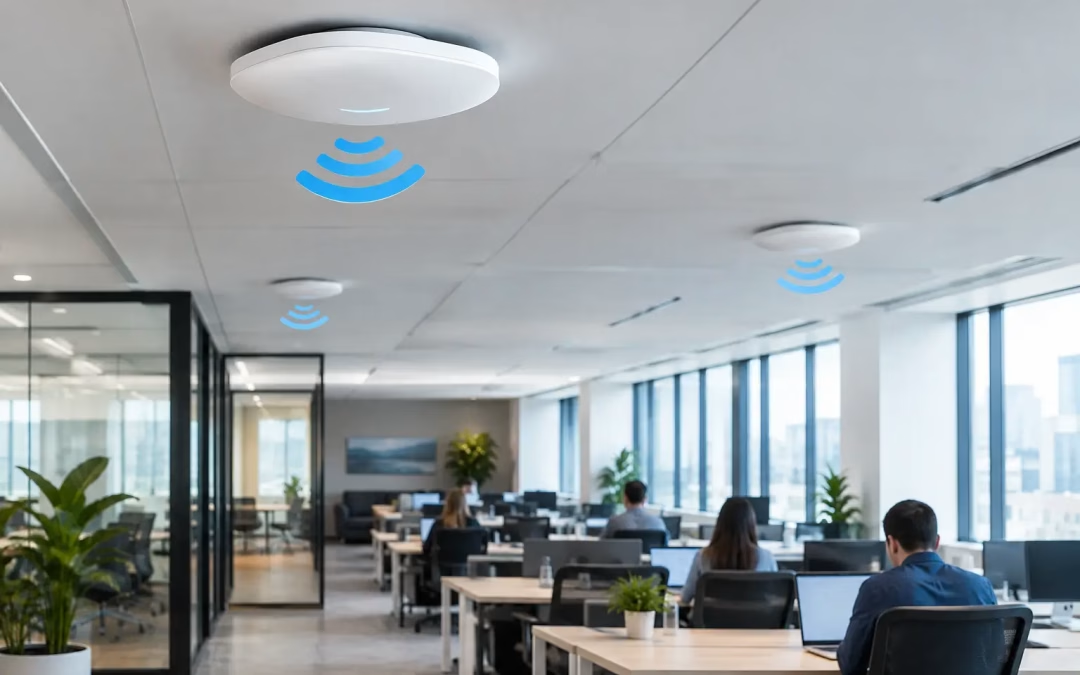
A conference room that drops video calls at 2 p.m. and a warehouse corner with no signal are not problems solved by simply adding another point. Understanding the role of Access Points in enhancing connectivity is crucial.
In today’s fast-paced digital world, reliable connectivity is not just a luxury but a necessity. For instance, imagine a team relying on a video conferencing tool to finalize a project with a tight deadline. If the connection drops intermittently, it can lead to miscommunication, delays, and frustration.
Similarly, consider a warehouse where employees use mobile devices to track inventory. Without sufficient signal, productivity is hampered, leading to operational inefficiencies. Therefore, it is critical to recognize that merely adding more points does not always solve these issues.
A comprehensive approach is required to understand the underlying causes of connectivity problems and to implement effective solutions, including strategic placement of points.
When devising a plan for multiple wireless devices in a large office, several factors come into play. First, the building’s architecture can significantly impact signal distribution.
For example, steel and concrete can obstruct Wi-Fi signals, requiring careful placement of points to ensure coverage. Understanding the number of users is equally important; a higher density of devices can lead to network congestion, necessitating additional points or better bandwidth management.
Furthermore, the nature of work being performed matters: video streaming, large file transfers, and VoIP calls all demand different levels of bandwidth and connectivity stability.
By addressing these factors and effectively utilizing points, organizations can create a tailored solution that meets their specific needs.
For office managers and IT decision-makers, ensuring dependable Wi-Fi across all areas of operation is paramount. This involves implementing a site-specific plan that proactively addresses potential weak points in coverage, such as areas prone to interference from electronic devices.
Overloaded points can lead to slow speeds and dropped connections, making it crucial to monitor network usage and capacity. Moreover, the visibility of cabling is another concern; exposed wires can pose safety risks and detract from the professional appearance of an office space.
By focusing on these aspects, organizations can ensure a seamless connectivity experience for their employees and clients.
Further Insights on Access Points
Ultimately, understanding the intricacies of your environment and the specific needs of your users is vital when strategizing for points.
This knowledge allows for more informed decisions that enhance overall connectivity and user experience. By investing time and resources into proper planning and implementation, organizations can significantly improve their wireless infrastructure, facilitating better communication, collaboration, and productivity across all levels of the business.
When planning for points, it’s essential to not only consider the physical layout of the workplace but also the technological advancements in wireless networking.
For example, Wi-Fi 6 technology offers improved efficiency and performance in environments with many connected devices. It can handle multiple connections more effectively than previous generations, which is particularly beneficial in busy office settings.
Moreover, leveraging mesh networking can further enhance coverage by allowing multiple points to communicate and distribute the signal more evenly throughout the space.
In addition to technology, understanding user behavior can help in optimizing point deployment. Conducting a site survey can provide valuable data on how employees interact with the network, identifying peak usage times and locations where connectivity issues are most prevalent.
This information can inform decisions on where to place points for maximum impact.
Lastly, it’s crucial to think about future scalability. As organizations grow and technology evolves, the wireless network must be able to accommodate new devices and increased traffic.
Planning for expansion from the outset can save time and resources down the line, ensuring that the network remains robust and capable of meeting future demands.
To create a plan to install multiple wireless devices in a large office, you need to account for the building, the number of users, the work being done, and the wired network supporting every connection.
For an office manager or IT decision-maker, the goal is straightforward: dependable Wi-Fi where people work, meet, move, and serve customers.
Getting there requires a site-specific plan that prevents weak coverage, overloaded devices, exposed cabling, and avoidable disruption during installation.
Key Considerations for Effective Access Points
Understanding the layout and specific needs of your environment is crucial when planning for points to ensure optimal performance.