
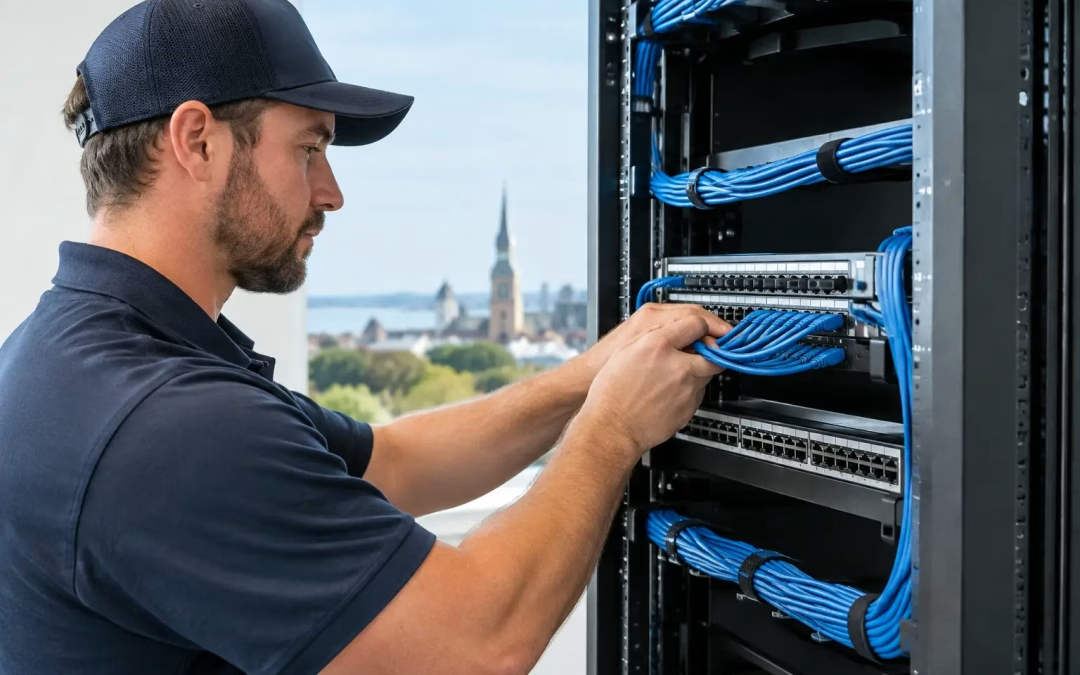
A new office can look ready for business long before its network is ready to support one. Desks, furniture, and computers may be in place, but weak Wi-Fi, patchwork cables, and poorly located network hardware can create problems on day one.
This is why investing in a robust data cabling infrastructure is crucial. It not only ensures seamless connectivity but also sets the stage for future scalability and efficiency.
For instance, consider a scenario where an office starts with a few employees and gradually expands. Without a solid data cabling foundation, adding new workstations and technology can become a logistical nightmare, resulting in downtime and frustration.
A comprehensive approach to data cabling helps avoid these pitfalls and allows for smoother growth. Furthermore, implementing a reliable data cabling system can significantly enhance team collaboration and communication. Employees are connected to a stable network that supports various applications and tools necessary for productivity.
Imagine a marketing team needing to collaborate on a project in real time. Having a dependable network allows for seamless access to shared files, video conferencing, and instant messaging tools, thereby facilitating effective teamwork.
Additionally, a well-planned data cabling infrastructure can accommodate various technologies, such as IoT devices that are increasingly used across industries, providing versatility as the business evolves.
Understanding the Importance of Data Cabling in Your Office Network
When planning data cabling installation in Charleston, SC, businesses need more than just cable pulled through walls. They need a physical network designed around how their team operates, where the business is headed, and how much downtime it can tolerate.
This means not only considering current needs but also anticipating future requirements. For example, if a business plans to expand its team, they should consider implementing a cabling system that allows for easy addition of new workstations. This foresight plays a critical role in avoiding costly overhauls later.
Furthermore, evaluating potential technological changes, such as adopting more high-bandwidth applications, can influence the type of cabling used. This ensures that the network remains efficient and effective over time.
High-speed internet access is no longer a luxury but a necessity, especially for businesses relying on cloud services and remote work capabilities. One specific improvement could be the integration of fiber optic cabling, which provides higher bandwidth and faster speeds compared to traditional copper wiring, future-proofing the network as internet demands continue to rise.
For offices, retail locations, medical practices, warehouses, and growing professional firms, structured cabling is the foundation behind reliable connectivity.
It affects workstation performance, Wi-Fi coverage, VoIP calls, cloud applications, security cameras, and the ability to add people without starting over.
For instance, in a medical practice, having a reliable data cabling system can ensure that patient records are quickly accessible, which is critical for providing timely care.
In a retail setting, robust data cabling can support point-of-sale systems and inventory management, directly impacting customer service and sales.
Structured cabling is also essential for security purposes; a well-implemented system can ensure that security cameras function optimally and that data is transmitted securely to monitoring systems.
Overall, structured cabling is an investment that pays off in improved efficiency, reduced downtime, and enhanced productivity, making it a vital consideration for any modern business.
The adaptability of structured cabling solutions allows businesses to reconfigure their networks in response to growth or changes in operational needs without significant disruptions, thereby maintaining continuity and workflow.
In conclusion, the importance of a well-designed and implemented data cabling system cannot be overstated. As businesses continue to grow and adapt to new technologies, the foundation of their networking capabilities relies heavily on data cabling.
Whether it’s supporting critical applications, enhancing customer experiences, or ensuring smooth operations, the benefits of investing in quality data cabling infrastructure are substantial.
Companies should prioritize their data cabling needs and seek expert guidance to build a network that not only meets their current requirements but also accommodates future growth.
By doing so, they can ensure that their business remains agile, competitive, and well-equipped to handle the challenges of tomorrow.
Moreover, as technology continues to evolve, businesses must stay informed about the latest advancements in data cabling solutions.
Emerging technologies like 5G and advancements in wireless networking can complement existing data cabling, ensuring that companies are prepared for the future.
By integrating these technologies, businesses can enhance their operational capabilities and maintain a competitive edge in their respective markets.
A proactive approach to data cabling also involves regular assessments and updates to the infrastructure, ensuring that it meets the current demands of the business.
This can include upgrading hardware, increasing bandwidth, and optimizing network layouts.
Furthermore, it is vital to work with experienced professionals who understand the intricacies of data cabling installation. They can provide tailored solutions that fit the unique requirements of each business.