
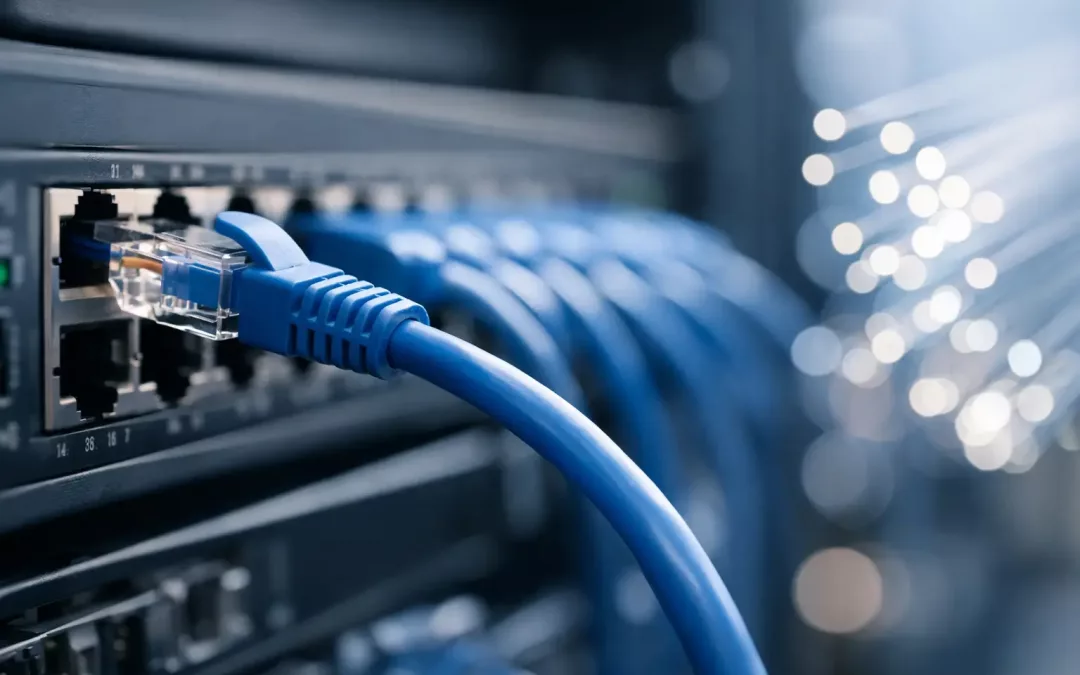
When your network slows down, drops calls, or struggles with video meetings, the problem is not always your internet provider. In many offices and homes, the real issue is the cabling behind the walls, above the ceiling, or feeding key devices across the building. That is where cat6 cabling starts to matter. It gives your network a stronger physical foundation, which means better speed, more consistent performance, and fewer day-to-day headaches.
For many property owners, Cat6 hits the sweet spot. It supports modern network demands without pushing every project into the higher cost range of Cat6A or fiber. If you are upgrading an office, setting up a new location, improving Wi-Fi coverage, or cleaning up years of patchwork wiring, Cat6 is often the right place to start.
What cat6 cabling actually does
Cat6 is a category of twisted-pair network cable designed to carry data at higher performance levels than older cable types like Cat5 or Cat5e. In practical terms, it helps connected devices communicate faster and with less interference. That matters whether you are running desktop workstations, VoIP phones, wireless access points, printers, cameras, point-of-sale systems, or conference room equipment.
On paper, Cat6 can support up to 10 Gbps over shorter distances and 1 Gbps over standard Ethernet runs. In the field, what matters more is that it gives businesses room to operate without bottlenecks caused by outdated cabling. If your network hardware has been upgraded but your cabling has not, you may never see the performance you paid for.
This is also why cabling should not be treated like a commodity. Two buildings can both have Cat6 installed and get very different results depending on layout, termination quality, cable management, testing, and how well the network was planned around actual use.
Why businesses choose Cat6 over older cabling
The biggest reason is longevity. Most businesses do not want to open walls, reroute ceiling runs, and interrupt operations again in a year or two because their cabling cannot keep up. Cat6 gives more headroom for current workloads and future upgrades.
That headroom becomes especially useful when your network is carrying more than basic web traffic. Cloud applications, large file transfers, security cameras, Wi-Fi 6 access points, and voice systems all place steady demands on the physical network. A cable plant that was good enough ten years ago may now be the weak link.
There is also a practical reliability benefit. Better cabling infrastructure tends to reduce troubleshooting time. When runs are labeled, terminated correctly, tested, and organized around your floor plan, it becomes easier to isolate issues and scale without creating a mess.
For small and mid-sized offices, that can translate into fewer service interruptions and less wasted time chasing random connectivity problems.
When Cat6 makes sense and when it may not
Cat6 is a strong fit for many office upgrades, tenant build-outs, retail spaces, medical offices, and homes that want dependable wired data connections. It works well when you want a balance of performance, cost control, and flexibility.
That said, it is not the answer for every environment. If you are wiring a space with very high bandwidth demands across longer distances, Cat6A may be the better choice. If you are connecting buildings or supporting specialized backbone applications, fiber may be more appropriate. If your current issue is poor wireless design rather than bad cable runs, replacing cabling alone may not solve the problem.
This is where a site-specific approach matters. The right decision depends on distance, device density, expected growth, budget, and how the space is actually used. Good cabling design is not about choosing the highest spec on a chart. It is about matching the infrastructure to the job.
Cat6 cabling and Wi-Fi performance
A lot of people assume Wi-Fi problems are purely wireless problems. That is only partly true. Access points still depend on wired backhaul, and if those cable runs are old, damaged, poorly terminated, or undersized for the traffic load, your wireless network will feel the impact.
That is why Cat6 often plays a major role in Wi-Fi upgrades. New access points can only perform as well as the network path feeding them. If you are trying to improve coverage, speed, and user experience in an office, retail space, or large home, the wired side of the network has to be part of the plan.
The same logic applies to smart office tools, video conferencing, and security devices. Strong wireless service starts with dependable cabling where it counts.
Installation quality matters as much as cable type
One of the most common mistakes in network projects is focusing only on the cable label. Category matters, but workmanship matters just as much. A poorly installed Cat6 run can underperform a well-installed lower-grade run.
Proper routing, bend radius, termination, labeling, patch panel organization, and testing all affect results. So does planning. If cabling is installed without considering desk layouts, equipment locations, access point placement, telecom room organization, or future growth, the system may work for now but become difficult and expensive to expand later.
A clean install also has operational value. When your racks, patch panels, and cable paths are organized, changes are easier. Moves, adds, and troubleshooting take less time. Your IT team, MSP, or support vendor can work more efficiently because the physical layer makes sense.
That is one reason many businesses prefer working with a contractor who understands both structured cabling and the broader network environment. The installation is better when the people pulling cable also understand switching, wireless layout, security devices, and business continuity.
What to expect during a Cat6 upgrade
A good Cat6 project starts with a conversation about what is not working and what needs to improve. That may include slow workstations, dead wall jacks, poor Wi-Fi in certain areas, messy cabling left behind by prior tenants, or a planned office move that needs to be done without downtime.
From there, the work usually moves into site review, layout planning, cable path design, drop count recommendations, and coordination around timing. In active offices, scheduling matters. The right plan minimizes disruption and avoids turning a network upgrade into a business interruption.
After installation, each run should be terminated, labeled, and tested. That last step is often skipped or rushed in lower-quality jobs, but it is what confirms the infrastructure is ready for use. You do not want to find out a conference room drop is bad after the furniture is in place and the team is trying to host a client call.
In Charleston-area offices, this kind of planning becomes even more valuable during relocations, renovations, and growth phases when multiple vendors are involved. Having one team manage the cabling side with a clear process can keep the network from becoming the bottleneck.
Residential uses are growing too
Cat6 is not just for commercial spaces. More homeowners now need reliable wired connections for remote work, streaming, gaming, whole-home Wi-Fi, cameras, and audio/video systems. In larger homes or homes with thick walls, strategic Cat6 runs can make a major difference in network consistency.
This is especially true when people rely on mesh systems or multiple access points. The wireless signal may be what you see, but the cabling behind it often determines whether the setup feels stable or frustrating.
For homeowners, the value is usually less about chasing maximum speed and more about making daily use dependable. No buffering in one room, no weak signal in another, no guessing whether the problem is the provider or the house wiring.
The real value of Cat6 is stability
Speed gets attention, but stability is what most people actually want. They want meetings that do not freeze, systems that stay connected, cameras that record properly, and workspaces that can grow without starting over. Cat6 supports that by giving your network a cleaner, more dependable foundation.
If your current setup is held together by aging cable, ad hoc additions, and years of small fixes, upgrading the physical infrastructure can solve more than one problem at once. It can improve performance, simplify management, and give you a better base for future hardware, wireless expansion, and security improvements.
When the wiring is right, everything built on top of it works better. That is usually the smartest place to invest first.